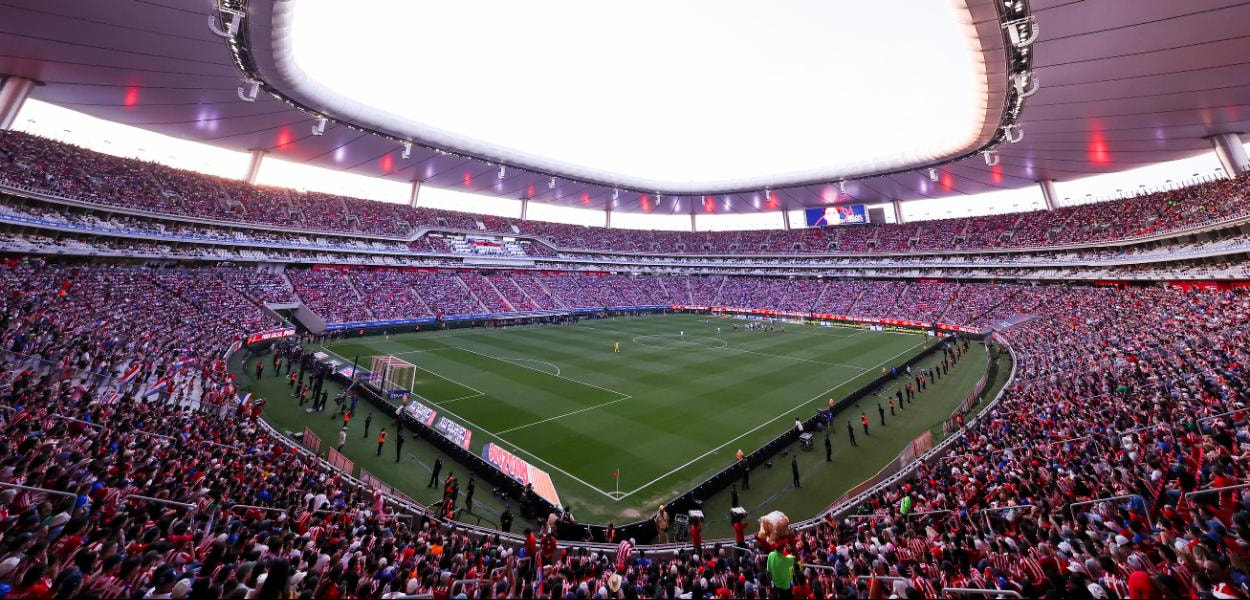
Akron is one of 16 stadiums hosting the tournament, which spans 104 matches and kicks off June 11. Except for the Mexico City venue, which was seeded back in December, each host facility needed to be sodded before the five week event. Installation work at stadiums is scheduled between April and June 2026.
Hybrid FIFA pitches
World Cup games are played on real grass with a small amount of artificial turf woven in on top of a special base. The pitches are hybrid, as required by FIFA, with about 95% of the turf being natural grass. Stadiums in warmer climates will install sections of turf with warm season grasses like Bermuda. Domed stadiums and outdoor pitches in cooler climates will use cool season grasses, a mix of Kentucky bluegrass and perennial ryegrass.
For turf consistency, every stadium needed to be altered to meet FIFA requirements, especially indoor stadiums and eight stadiums that use artificial turf. The grass being installed at Estadio Akron is tied to years of work between the University of Tennessee, Michigan State University, and FIFA to maximize turf consistency for player safety, performance, and fairness. Researchers learned in 2022 which stadiums would rely on UT turf expertise, including several indoor venues that present added challenges for maintaining real grass over a multiweek tournament.
That work includes turf researched and developed in Tennessee, aimed at providing a similar feel across open air and domed stadiums in both warm and cold climates. With stadiums in cities from Vancouver to Guadalajara hosting the tournament, varying sunlight, elevation, climate, and time zones all affect how grass grows.
How the new surface is built
Grown on plastic to minimize root damage, sections of sod are cut before being rolled up and transported from sod farms to stadiums. It takes about 30 trucks packed with sod for each field. When it is time to install the field, plastic is removed from the sod and the turf is placed atop several inches of sand on top of a geotextile fabric that covers the Permavoid drainage tiles on the bottom.
John Sorochan, a distinguished professor of turfgrass sciences and management at the University of Tennessee at Knoxville, said:
All the sod on plastic that's going in the stadiums was established ... beginning last April, May, June
Sorochan said that timeline was intended to get the sod ready for installation at host stadiums between April and June 2026.
Sorochan said synthetic fibers are stitched in as players run and slide on the playing surface:
To act like rebar to avoid a big blowout or a divot
Sorochan said this homogenizes the surfaces to make the bounce and traction of each field feel similar. Sorochan said:
That's taken several weeks to do those constructions and those changes