
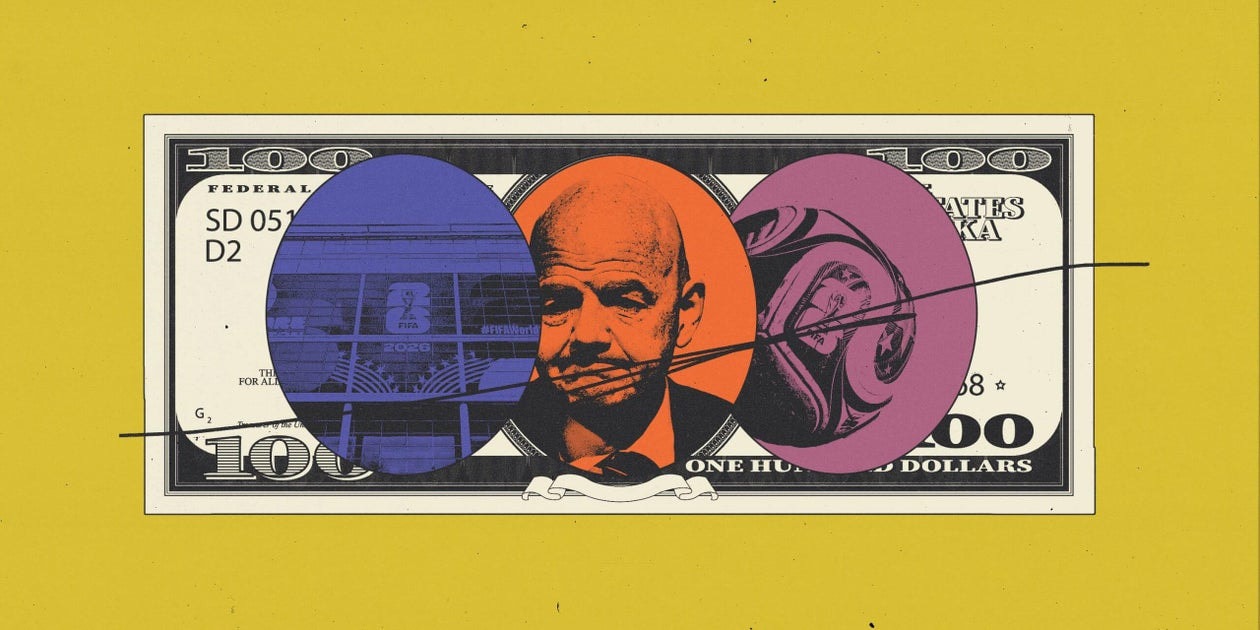

The United States committed to hosting the 2026 men's FIFA World Cup, and the 11 U.S. host city committees now appear to be carrying much of the financial burden for staging the expanded tournament. What began as a joint United States, Mexico, and Canada bid that secured hosting rights in 2018 has evolved into a strained relationship between FIFA and American organizers ahead of the first 48 team World Cup, the largest edition in history and the first run without a centralized local organizing committee.
In fall 2021, FIFA executives toured North American cities still in contention. Twenty three cities were originally in the mix before the field was reduced to 16. At a get to know you meeting held at SoFi Stadium near Los Angeles, a senior FIFA executive laid out the core hosting agreement principles: FIFA takes the vast majority of revenue from ticketing, media rights, sponsorship, concessions, and parking, while cities cover transportation, safety, security, and costs extending beyond stadiums to FIFA Fan Fest locations, airports, and competition vehicles.
Kathryn Schloessman, CEO of the Los Angeles Sports and Entertainment Commission, reportedly raised her hand and asked:
So, what exactly do we get out of this?
The FIFA executive's reply drew stunned reactions from Los Angeles sports leaders in the room:
Hosting this tournament will put your city on the map.
One attendee speaking on condition of anonymity recalled the moment bluntly:
What did he just f***ing say? Hollywood, Tinseltown, La La Land, the Oscars, the Grammys, the Emmys, the Golden Globes, Super Bowls, Olympic Games, NBA All Star, NHL All Star, MLB All Star… but FIFA will put Los Angeles on the map?
FIFA projects the tournament will generate more than $11 billion in revenue against an operating budget of $2.7 billion. At a pre World Cup press conference on Wednesday, FIFA president Gianni Infantino responded to criticism of those revenues by stating:
Every dollar goes back into football.
He added that FIFA has to invest in countries no one else invests in, citing Sierra Leone, East Timor, and Vanuatu among examples.
Host cities have grown skeptical of FIFA's promoted $30.5 billion economic impact projection for the U.S. economy, with slower than expected travel and hotel uptake adding to the frustration. Transit pricing disputes have overshadowed New York and New Jersey and Boston preparations. In Foxboro, officials nearly refused FIFA a license to host World Cup games at Gillette Stadium over a reported $7.8 million security funding shortfall.
Some cities were reportedly unhappy with the match allocations they received after the December draw, and multiple official FIFA Fan Fest plans have been scaled back where cities could not absorb the costs, including in the Bay Area and New Jersey. With the U.S. now the sole bidder for the 2031 Women's World Cup after submitting a joint bid with Mexico, Costa Rica, and Jamaica, host cities may be in no rush to repeat the same concessions made for 2026.